

One shared tunnel. One lane each way. And a boat that leaves whether or not you timed the drive right. That single fact is what turns a Whittier cruise morning into a small logistics puzzle, and it is the reason so many people who nail every other part of their Alaska trip still end up sprinting the last hundred yards to the dock.
Here is the good news: the puzzle has a clean solution once you understand three things. You need a tunnel window, a comfortable buffer, and a backup plan for the parking lot at the terminal. Get those three right and the whole morning stays boring, which is exactly what you want on a day you are about to spend on the water. This guide walks you through each piece in the order you will actually hit them, so you can plan the drive, the timing, and the arrival without second-guessing yourself. If you would rather skip the planning and just confirm the specifics, the operator keeps a single page with directions to the Phillips Cruises & Tours terminal that covers the drive, the coach, and the rail options side by side.
I have made this run a few times now, once badly, and the difference between a rushed arrival and a relaxed one came down to one decision made the night before. More on that in a minute.
Why the tunnel sets the whole schedule
Whittier is reached by a single road tunnel that runs through a mountain near Portage, and for most of the day it carries traffic in one direction at a time. That means you cannot simply leave at the moment you feel like it. You show up for a scheduled window, you wait, you drive through, and then you are on the other side with a short hop to the marina.
The practical rule I would give anyone: pick your tunnel window first, then work backward from the cruise departure, not forward from your Anchorage hotel. People plan the reverse and end up cutting it close on the back half. The tunnel runs on a fixed schedule managed by the state, and you can confirm current operating times through the State of Alaska before you lock in plans. Schedules shift between seasons, so treat last year’s blog post as a rough guide and the official listing as the truth.
Three arrival styles, one honest recommendation
You have roughly three ways to get to the terminal, and each one trades money against control in a different way. Here is how I think about them.
| Option | What it costs you | What you gain |
|---|---|---|
| Self-drive | Early start, tunnel timing, parking | Full control, photo stops along Turnagain Arm |
| Coach package | Less flexibility, fixed schedule | No driving stress, someone else owns the tunnel window |
| Rail and cruise | Highest cost, fixed timing | Scenery without a steering wheel, memorable arrival |
The drive down the Seward Highway is genuinely one of the better stretches of pavement in the country, and if you have never done it, I would pick self-drive even with the tunnel chore. You get the pull-outs along Turnagain Arm, the sudden waterfalls, and a real chance at spotting beluga whales or Dall sheep if you are paying attention. According to the National Park Service, that corridor and the surrounding public lands hold a deep mix of wildlife and recreation access that rewards slow travel. Slow is the operative word.
A named framework for the morning: the Three-Buffer Plan
I use a simple structure for any trip that involves a fixed crossing and a departing boat, and it maps cleanly onto this one. I call it the Three-Buffer Plan, and it protects you at three separate points where trips usually fall apart.
- Tunnel buffer. Aim to arrive at the tunnel staging area with time to spare before your window. If you miss the window, you wait for the next one, and the next one does not care about your cruise ticket.
- Parking buffer. Build in time to park, walk, and find the check-in spot. The marina lot fills on busy mornings, and a full lot adds minutes you did not budget.
- Coffee and restroom buffer. This one sounds silly until you have skipped it. Leaving a little room for the small stops keeps the whole morning calm instead of frantic.
If I had to name the single easiest fix, it is the first buffer. Most people arrive at the tunnel exactly at their window, then treat the other side as though it were instant. It is not. Give yourself a real margin and the rest takes care of itself.
The one decision to make the night before
Pack your day bag before you sleep, not in the morning. Layers, a hat, sunglasses, a water bottle, your printed confirmation, and a phone charger go in one place by the door. Glacier days on Prince William Sound can turn cool and windy even when Anchorage feels warm at breakfast, and the National Weather Service is a reasonable stop for a forecast the evening before. I would not obsess over the numbers. I would just assume it will be colder on the water than it is in town and dress accordingly.
Do a five-minute confirmation of the tunnel schedule and your departure time, then set your alarm for a full hour earlier than feels necessary. That extra hour is the cheapest insurance on the whole trip, and it is the thing I would still do on a second visit.
On the water, the payoff
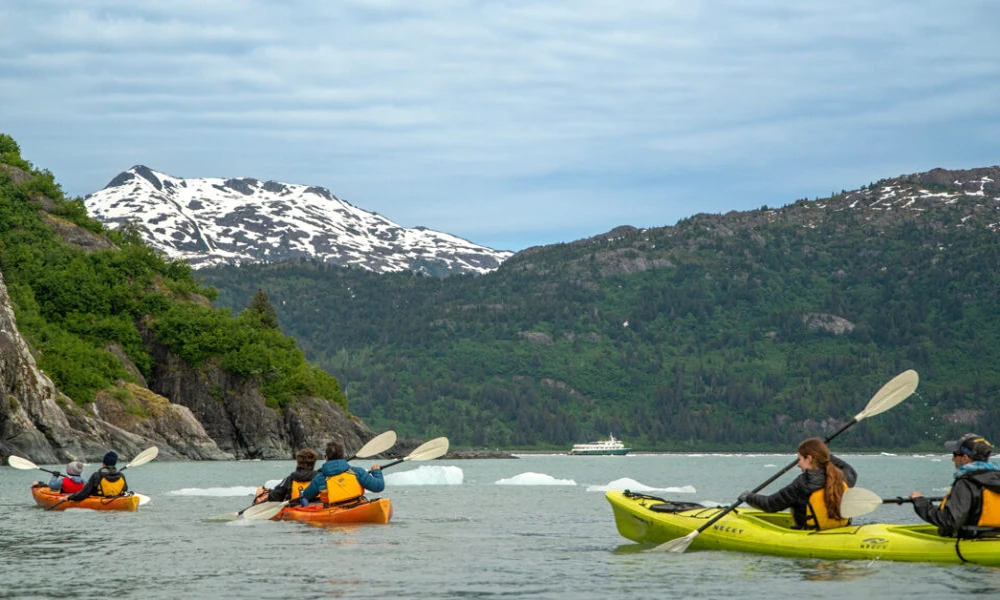
Once you are checked in and aboard, the planning burden drops away and the day becomes what you came for. You are moving through fjords, past tidewater glaciers, and alongside wildlife that does not care about your schedule at all. The terminal and the cruise itself are run by the operator, so the arrival plan is really about getting yourself to their door in a calm state, and then letting the morning hand over to someone else.
I will say this plainly: the trip is worth the tunnel chore. The scenery does the heavy lifting. Your only job is to show up on time and unhurried.
Your short pre-departure checklist
Before you leave for Whittier, run this list once. Confirm your tunnel window against the official schedule. Put your booking confirmation where you can reach it without digging. Fill the tank in Anchorage or Girdwood, since services thin out on the way. Load a paper or offline copy of your route. Pack one layer more than you think you need. Set a departure time that lands you at the tunnel with margin to spare.
None of that takes more than ten minutes. All of it removes a reason to hurry, and hurrying on a cruise morning is the one thing that can sour an otherwise perfect day. A calm start, a comfortable buffer, and the water ahead. That is the whole plan.
If you take only one thing from this piece, take the tunnel buffer. Everything else can flex, but that window is fixed, and the boat will not wait. So build the margin, pack the bag early, and enjoy the drive. Then tell me afterward which stretch of the Seward Highway you would stop at twice.