
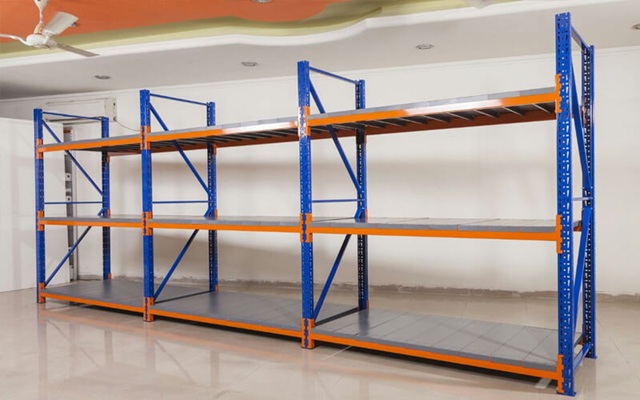
Heavy Rack Systems Built for Durability: Store More, Stress Less
Heavy rack systems stand as monuments to human ingenuity in the perpetual quest to conquer space, not through cosmic exploration, but through the elegant manipulation of earthbound dimensions within our warehouses and distribution centres. Consider for a moment the profound simplicity of this invention: vertical steel frameworks that defy gravity’s insistent pull, bearing loads measured in tonnes whilst occupying minimal ground area. In Singapore, where land represents perhaps the most precious commodity in a nation built upon reclaimed shores and vertical ambition, these storage systems embody a philosophy as old as civilisation itself. We build upwards when outwards proves impossible. The heavy rack, in its industrial grace, transforms cubic metres of empty air into productive storage volume, a feat no less remarkable for being commonplace in modern logistics operations.
The Physics of Load Distribution
The fundamental principles governing heavy rack performance derive from laws of physics that have operated unchanged since the universe began its expansion billions of years ago. When a laden pallet rests upon horizontal beams, forces distribute themselves through the steel matrix according to equations that Newton himself would recognise.
Key forces at work in heavy rack systems include:
- Compression forces travelling downward through vertical uprights to the concrete floor
- Tensile stresses pulling at beam connections, testing welds and bolts continuously
- Temperature and humidity variations in Singapore affecting material performance over time
Understanding load capacity requires appreciation for material science at its most practical. Steel, that alloy of iron and carbon refined through centuries of metallurgical evolution, possesses qualities that make it uniquely suited for heavy rack construction. Cold-rolled steel profiles, shaped into precise geometries, optimise strength properties whilst minimising material usage and cost.
Configurations Across the Storage Universe
Heavy rack systems manifest in configurations as diverse as the galaxies themselves, each adapted to specific storage environments and operational requirements:
- Selective pallet racking provides universal access, allowing retrieval of any stored item without disturbing others
- Drive-in systems sacrifice accessibility for density, creating deep storage lanes where forklifts venture into rack structures
- Push-back configurations employ inclined rails and gravitational pull to move pallets automatically
- Cantilever racks extend beams from single-sided uprights, creating unobstructed storage for lengthy items
The selection process demands careful observation and measurement. Warehouse managers must catalogue existing constraints: ceiling heights that limit vertical ambition, floor loading capacities that define maximum weights, aisle widths that determine equipment manoeuvrability. Singapore’s Building and Construction Authority imposes standards derived from engineering analysis and accumulated experience, ensuring installations perform safely under foreseeable conditions.
Installation Precision and Environmental Adaptation
The installation of Heavy rack systems requires precision comparable to aligning telescope mirrors. Verticality tolerances measured in millimetres separate stable installations from dangerous ones. Base plates anchor these structures to concrete floors using expansion bolts or chemical anchors, creating foundations that resist both vertical compression and horizontal shear forces.
Singapore’s tropical climate demands specific protective measures:
- Galvanisation applies zinc layers to prevent rust formation
- Powder coating encapsulates steel in polymer films against moisture
- Regular maintenance inspections identify corrosion before structural compromise occurs
These treatments extend service life from years to decades, a worthwhile investment in structures expected to function throughout multiple economic cycles.
Safety Through Understanding and Vigilance
“The cosmos is within us. We are made of star-stuff. We are a way for the universe to know itself. Similarly, every heavy rack system contains within its structure the accumulated knowledge of materials science, engineering principles, and hard-won safety lessons.”
Essential safety protocols for heavy rack operations include:
- Load capacity placards affixed to each storage bay communicating maximum permissible weights
- Regular inspections by trained personnel identifying damage before escalation
- Forklift operator training specific to rack loading procedures
- Monitoring for bent uprights, twisted beams, or compromised connections
In Singapore’s workplace safety regulatory environment, such training carries legal weight beyond mere recommendation. Operators who disregard loading limits or bypass safety procedures expose themselves and colleagues to preventable hazards.
Economic Astronomy: Calculating Storage Returns
The economic justification for heavy rack investment involves calculations as precise as those determining planetary orbits. By utilising vertical space efficiently, these systems reduce the ground area required for equivalent storage capacity.
Measurable benefits of heavy rack implementation:
- Storage capacity increases of two to three times compared to ground-level storage
- Reduced operational costs through avoided facility expansions
- Decreased transportation distances within warehouses
- Improved inventory accuracy with designated storage locations
In Singapore, where industrial real estate commands premium pricing, the mathematics prove compelling. Businesses recoup their heavy rack investments through rental savings alone within remarkably short timeframes.
The Continuing Evolution
Modern heavy rack systems incorporate sensing technologies that would astound observers from previous generations. Wireless strain gauges monitor structural deflection in real time, providing early warning of overloading or damage. Warehouse management systems integrate with rack configurations, optimising storage location assignments based on product characteristics and retrieval patterns. These innovations transform static storage structures into intelligent components of automated logistics networks that respond dynamically to changing operational demands.
The future promises materials stronger yet lighter than current steel alloys, modular designs permitting rapid reconfiguration as needs evolve, and integration with robotic systems that eliminate human exposure to heavy lifting hazards. Singapore’s commitment to technological advancement ensures continued innovation in Heavy rack design and deployment.