

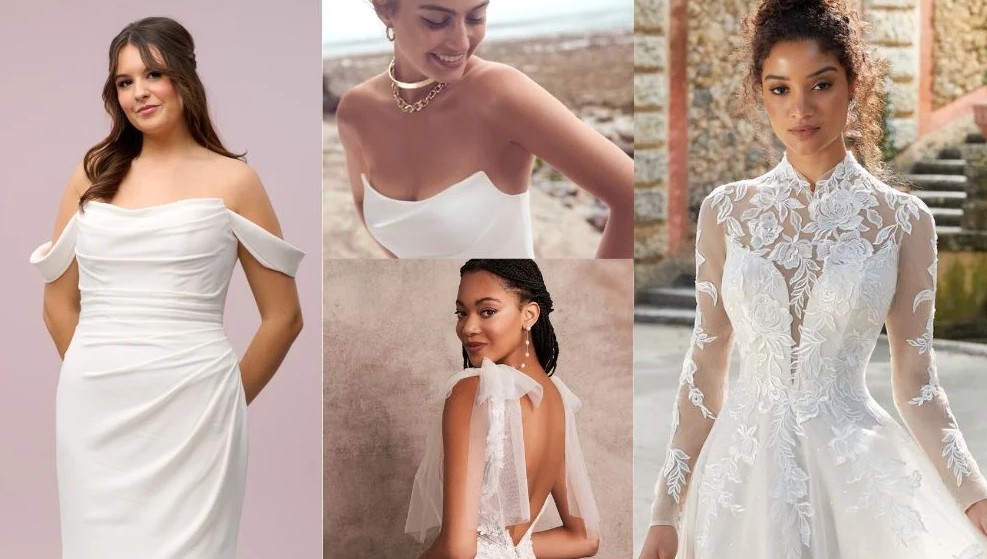
For brides planning a wedding, the challenge is deciding which trends will still look elegant years from now. Wedding photographs become family keepsakes, so choosing timeless design is often more important than following every seasonal trend.
Modern Brides Want Versatility
One of the biggest changes in bridal fashion is flexibility. Today’s brides want dresses that adapt throughout the day instead of remaining exactly the same from ceremony to reception.
Detachable sleeves, overskirts, removable bows, and convertible trains allow one gown to create multiple looks without changing dresses entirely. This practical approach has become popular because it combines elegance with comfort.
Clean Lines Continue to Lead
Minimalist fashion has influenced bridal collections around the world. Rather than relying on heavy embellishment, many designers now allow luxurious fabrics and expert tailoring to speak for themselves.
Satin, crepe, and mikado remain favorites because they create crisp silhouettes that photograph beautifully in both traditional and contemporary venues.
The Rise of the Square Neckline
Among all modern bridal trends, the square neckline has experienced one of the strongest comebacks. Inspired by classic European fashion yet perfectly suited to contemporary weddings, it offers structure without feeling overly formal.
The balanced shape naturally frames the shoulders and collarbone while complementing both minimalist and romantic gowns.
Brides exploring different neckline options often begin with a detailed wedding dress neckline guide, which compares today’s most popular styles and explains how each one creates a different overall look.
Texture Is Replacing Excessive Sparkle
Instead of covering gowns with heavy embellishment, many designers are creating visual interest through texture.
Three-dimensional floral appliqués, embroidered lace, soft pleating, layered tulle, and subtle pearl details provide depth while maintaining a refined appearance. This approach feels luxurious without overwhelming the bride.
Comfort Has Become a Priority
Brides no longer accept discomfort as part of the wedding experience. Lightweight construction, supportive bodices, breathable fabrics, and practical silhouettes have become just as important as appearance.
Designers increasingly recognize that a bride should enjoy every hour of her wedding day-not spend it adjusting her gown.
Structured Necklines Are Growing in Popularity
Alongside square necklines, structured bodices continue to gain attention because they provide both support and elegant proportions.
Modern square neck wedding dresses demonstrate how architectural lines can feel simultaneously timeless and contemporary. They pair beautifully with sleek fabrics, understated accessories, and sophisticated hairstyles.
Individual Style Is the Biggest Trend
Perhaps the most significant change in bridal fashion is that there are fewer rules than ever before.
Some brides choose dramatic princess gowns, others prefer minimalist satin dresses, while many combine classic silhouettes with modern details. Rather than following trends blindly, today’s brides are creating wedding looks that genuinely reflect their personalities.
Looking Beyond the Wedding Day
One useful question bridal stylists often ask is surprisingly simple: “Will you still love this dress when you look at your wedding album twenty years from now?”
If the answer is yes, the dress has already passed the most important trend test of all.
Final Thoughts
Wedding fashion will continue to evolve every season, but beautiful tailoring, thoughtful proportions, elegant necklines, and luxurious fabrics will never lose their appeal. Choosing timeless design over temporary fashion ensures your wedding photographs remain just as meaningful many years after the celebration.