

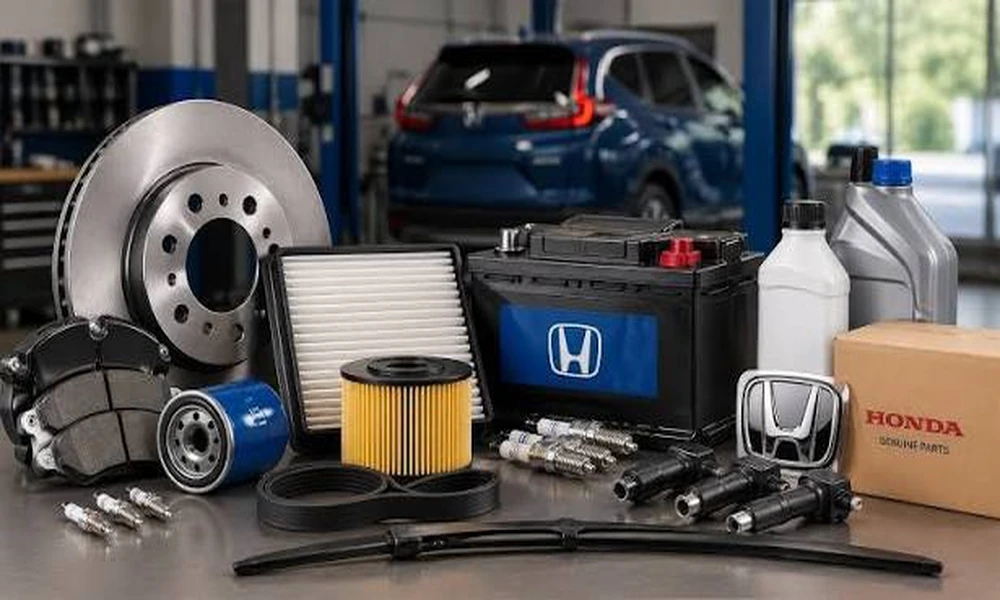
Here’s a number that should change how you think about car maintenance: the average American car on the road right now is nearly 13 years old. That’s not a throwaway stat. It means most Honda Civic, Accord, and CR-V owners are going to face parts decisions long after the factory warranty is gone, and those decisions compound over time.
Buy the right part once, and you’re done. Buy the wrong one, and you’re back under the hood six months later with a new bill and a lot of frustration. This guide breaks down what “genuine” actually means in the parts world, where the real risks are, and how to source the right components without overthinking it.
Americans Are Keeping Their Hondas Longer Than Ever
The trend driving more parts purchases right now isn’t mechanical failure. It’s economics. Cars, trucks, and SUVs in the U.S. hit a record average age of 12.6 years in 2024 as people held onto their vehicles largely because new ones cost so much. That figure comes from S&P Global Mobility’s analysis of state vehicle registration data, reported by PBS NewsHour in May 2024.
Your Honda was designed to go well past 200,000 miles when properly maintained. The people who get there aren’t lucky. They’re deliberate about what goes into the car. And that starts with understanding what “genuine OEM” means versus the sea of alternatives sitting in online carts and auto parts store shelves.
What “Genuine OEM” Actually Means (and What It Doesn’t)
OEM stands for Original Equipment Manufacturer. A genuine Honda part is the exact component Honda specified for your vehicle at the factory. It matches tolerances, materials, and fitment to your specific year, make, and model because it was engineered alongside the car itself, not reverse-engineered from one later.
Aftermarket parts are built to replace OEM components. Quality varies wildly. Some certified aftermarket options perform close to OEM spec. Others don’t. The category includes everything from precision-engineered replacements from established brands to poorly cast knock-offs that were never tested in real conditions.
The confusion is understandable. Packaging looks similar. Prices are lower. But there are three places where the difference shows up hard:
- Fit. A genuine part is made for your exact vehicle. An aftermarket piece may require adjustment, shimming, or forced installation. Tom Dance, owner of Herb’s Paint and Body Shop, summed it up plainly: “In 75 to 80 percent of the cases, the non-OEM hoods and fenders did not fit correctly.”
- Sensor compatibility. Modern Hondas have complex ADAS (Advanced Driver Assistance Systems) that depend on precise part dimensions. A component even slightly out of spec can throw calibration off and trigger fault codes.
- Warranty protection. If an aftermarket part causes a failure, your Honda warranty claim can get complicated fast. Genuine parts keep the coverage clean.
The “Fit-First, Cost-Second” principle is worth adopting as a personal rule: before any part purchase, ask whether a fitment issue would cost you more in labor than you’d save on the part price. For consumables like cabin air filters, the math often favors aftermarket. For brake components, suspension, or anything touching your car’s electronics, it rarely does.
The Counterfeit Parts Problem Is Bigger Than Most Drivers Realize
There’s a third category that rarely gets discussed in OEM-vs-aftermarket comparisons: counterfeits. These aren’t low-quality parts trying to compete on price. They’re fraudulent products sold as something they’re not, and they’re flooding online marketplaces.
The scale of this problem is documented. In 2021, counterfeit and pirated goods were estimated to account for USD 467 billion, or 2.3% of global imports, a level comparable to the GDP of several OECD economies. The OECD’s tracking of counterfeit goods specifically calls out automotive parts as one of the hazardous categories increasing in prevalence. And for U.S. consumers, the financial hit is more specific: findings from the U.S. Department of Commerce and the OECD indicate that counterfeit auto parts entering the U.S. market carry an estimated financial impact of over $3 billion annually , according to the Automotive Anti-Counterfeiting Council (A2C2).
The danger isn’t just financial. Counterfeit brake pads, oil filters, and airbag components have been linked to real mechanical failures. When you buy through a generic marketplace listing with no verifiable supply chain, you have no way to know what you’re actually getting.
The OEM Decision Matrix: When to Buy Genuine vs. When Aftermarket Is Fine
The honest answer isn’t “always buy genuine.” It’s “buy genuine when it matters.” Here’s a practical framework:
| Part Category | OEM Genuine | Certified Aftermarket | Notes |
|---|---|---|---|
| Brakes (pads, rotors, calipers) | Strongly preferred | CAPA-certified only | Safety-critical; sensor interaction on newer models |
| Engine components (timing belt, gaskets) | Strongly preferred | Use caution | Failure risk is high; repair costs dwarf savings |
| Electrical / ADAS sensors | Always | Not recommended | Calibration failures, false fault codes |
| Body panels, exterior trim | Preferred for fit | Acceptable if CAPA-certified | Fitment variance is common in non-certified parts |
| Cabin air filter, wiper blades | Either | Fine | Low consequence; price difference meaningful here |
| Oil filter | Preferred | Reputable brand only | Counterfeit risk in this category is documented |
Notice the pattern. The higher the consequence of failure, the shorter the argument for saving money upfront. Nobody who’s replaced a Honda engine because a cheap timing component failed thinks they saved anything.
How to Actually Source Genuine Honda Parts Without the Hassle
Sourcing genuine parts used to mean calling a dealer during business hours, waiting on hold, and hoping the parts desk had the right catalog entry. That friction pushed a lot of people toward online marketplaces where the verification problem starts.
The cleaner option is ordering directly through a Honda dealer’s own parts portal. That supply chain goes from Honda’s distribution network straight to your door, no gray market, no re-boxing, no guessing. If you’re in the Central Valley, you can order genuine Honda parts Visalia through Visalia Honda’s online parts system, entering your vehicle’s year and model to pull from a catalog built specifically for your car.
The practical steps look like this:
- Know your VIN before you start. It resolves any ambiguity between model years, trim levels, and option packages in one step.
- Confirm the part number against your service manual or a prior dealer invoice if you have one.
- Ask about the warranty on the part. Genuine Honda replacement parts typically carry a 12-month limited warranty when installed by an authorized dealer.
- If you’re having a shop install the part, make sure they’ll accept customer-supplied components before you order.
Four steps. That’s the whole process. And it eliminates every risk the counterfeit and low-quality aftermarket categories carry.
The Long Game on Honda Ownership
Honda builds cars that genuinely last. The K-series and J-series engines have documented histories of 300,000-plus miles when owners treat maintenance seriously. That reputation isn’t marketing. It’s the result of tight engineering tolerances that depend on components staying within spec across years of use.
Every time you swap a genuine part for a mismatched replacement, you’re introducing a variable into a system designed to operate without one. Sometimes nothing happens. Sometimes you feel it in the next oil change. Occasionally you feel it at highway speed in a way you’d rather not.
The Honda you have is almost certainly worth maintaining well. Do the math on replacement cost versus repair cost at current new-vehicle prices, and you’ll find that quality parts are almost never the expensive choice. They’re just the one that doesn’t come with a follow-up bill.